
Superficial vein thrombosis (SVT) is a medical condition where blood clots form in veins that are close to the skin, most commonly in the legs or sometimes in the arms. While it may sound scary, learning about SVT can help you recognize symptoms early and know when to seek medical care.
🩸 What Is Superficial Vein Thrombosis?
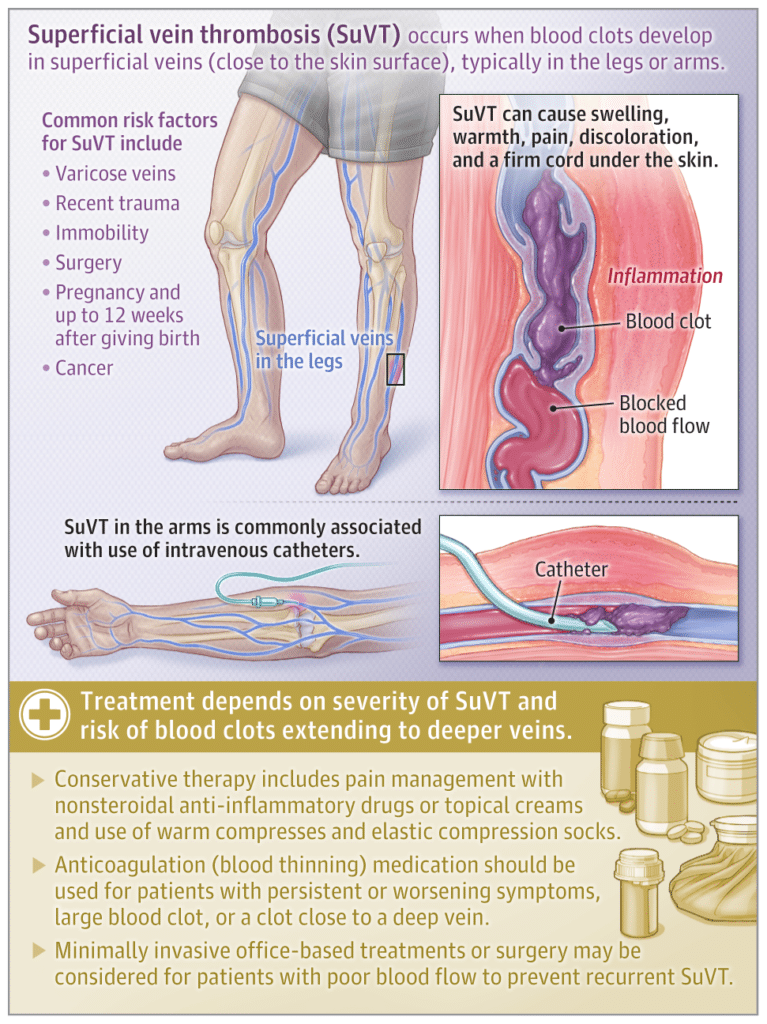
SVT happens when a small blood clot develops in a vein just under the skin. These veins can become swollen, red, and painful. In the arms, SVT often occurs after having an intravenous (IV) line or catheter.
⚠️ Symptoms to Watch For
If you have SVT, you might notice:
- Swelling along the vein
- Warmth or redness of the skin
- Pain or tenderness
- Skin changes over the vein, like a firm cord or darker color
—
🧬 Common Risk Factors
You may be at higher risk for SVT if you:
- Have varicose veins
- Are pregnant or recently gave birth (within 12 weeks)
- Have had recent surgery, injury, or long periods of sitting or lying down
- Use birth control pills or hormone therapy
- Are over 60 years old
- Have cancer or blood-clotting disorders
- Are overweight or have certain inflammatory conditions, like lupus
🩺 Why SVT Matters
Sometimes, a clot in a superficial vein can extend deeper into the leg and cause Deep Vein Thrombosis (DVT). DVT can be dangerous because clots can travel to the lungs, causing a pulmonary embolism (PE), which may lead to serious complications or even death.
- About 1 in 4 people with SVT also have a clot in deeper veins.
- Signs of a PE include sudden shortness of breath, chest pain, or feeling dizzy.
🏥 How SVT Is Diagnosed
At the Vein Center of Cincinnati, we start with a consultation to assess the problem. We then perform an ultrasound to see if the clot has reached deeper veins.
💊 Treatment Options
Treatment depends on the size and location of the clot, and your risk of developing DVT:
- Conservative Care
- Nonsteroidal anti-inflammatory drugs (NSAIDs), like ibuprofen
- Warm compresses
- Compression stockings to improve blood flow
- Blood Thinners
- For larger clots (>5 cm) or clots near deep veins, doctors may prescribe low-dose blood thinners, such as fondaparinux.
- Surgical or Minimally Invasive Treatments
- In some cases, doctors may consider procedures like thermal ablation (heat closure) or sclerotherapy (injecting a substance to close the vein) to prevent recurrence.
✅ Take-Home Message
Superficial vein thrombosis is usually treatable and often improves with simple care. However, it’s important to watch for symptoms and follow up with your doctor to prevent complications like DVT or pulmonary embolism.
If you notice sudden leg pain, swelling, or trouble breathing, seek medical attention immediately.
This article is for educational purposes only and does not replace medical advice. If you think you have SVT, consult Dr. Heart at The Vein Center of Cincinnati (513) 232-2400.